It's 11:47 PM. I've just finished a chapter of a book I've been trying to read for three weeks. I'm proud of myself—until I realize I've also, in that same hour, checked my phone forty-three times. Not for anything urgent. Just... a quick peek. A little dopamine hit. A scroll through a feed that has somehow convinced my brain it's a matter of life and death.
I'm a reasonably intelligent adult. I know the risks of doomscrolling. I've read the articles. And yet, here I am, thumb twitching toward the screen like a lab rat that's forgotten where the lever is but keeps pressing it anyway.
If you've ever lost twenty minutes to a feed of oddly satisfying hydraulic press videos and emerged feeling like you've been lightly hypnotized, welcome. You're in good company. And the science behind why this happens is genuinely fascinating—and, I'd argue, a little infuriating once you understand it.
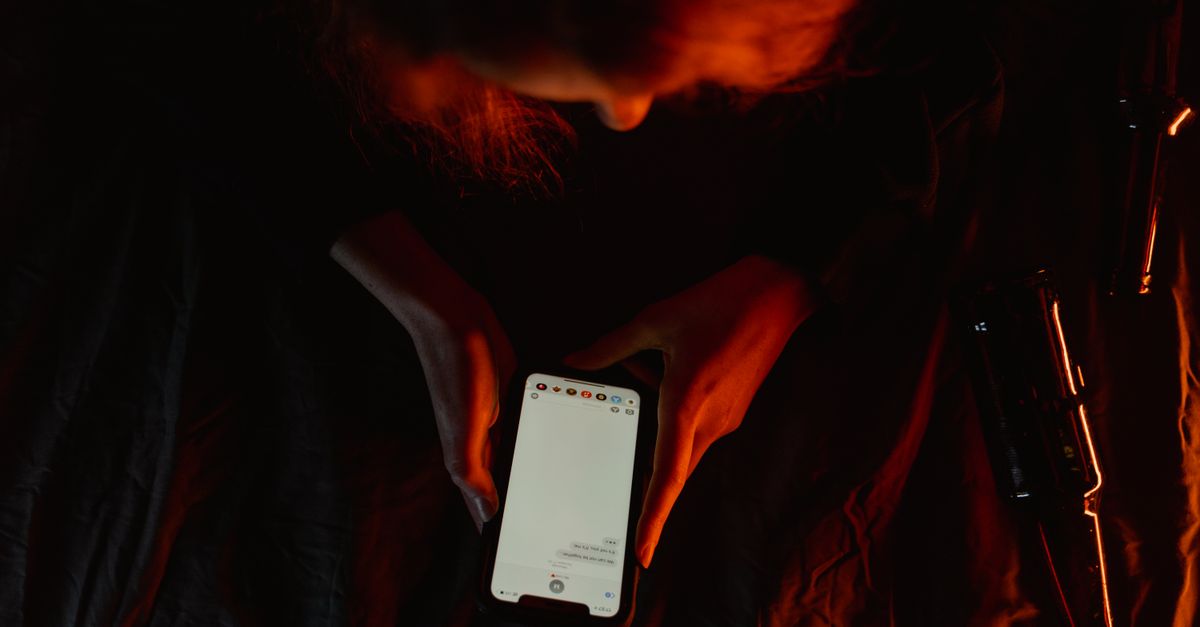
Your Brain Is Being Hijacked (And It's Not Even Subtle)
Let's be honest: we talk about "willpower" and "discipline" like scrolling is a personal failing. It's not. The infinite scroll was engineered by some of the smartest people in Silicon Valley specifically to bypass your willpower. That's not a conspiracy theory—it's a design brief.
Here's what most people miss: your brain isn't wired to resist this. It's wired to reward it.
Every time you swipe or scroll, you're pulling a lever in a slot machine. Sometimes you get a boring post. Sometimes you get a genuinely funny video. Sometimes you get a notification that someone you haven't spoken to in years liked your photo. The unpredictability is the point. Behavioral scientists call this variable ratio reinforcement, and it's the same psychological mechanism that makes gambling so sticky.
Your brain releases dopamine not when you get the reward, but when you anticipate it. The hunt, not the catch. The scroll is the reward. That's why you can scroll for an hour and feel like you've done absolutely nothing—because you haven't "done" anything. You've just been hunting.
I've found that understanding this changes everything. It's not that you're weak. It's that you're playing a rigged game with a brain that's doing exactly what it evolved to do.
The "Just One More" Lie Your Brain Tells You
Ever told yourself you'd "just check Instagram for a minute" and surfaced forty-five minutes later, confused about what year it is? Yeah. Me too.
There's a reason for that. Time perception goes completely out the window during passive scrolling. Studies have shown that when we're engaged in what researchers call "flow-adjacent" activities—where there's no natural stopping point—our brains lose track of time. And infinite scroll is the ultimate "no natural stopping point" activity. There's no bottom, no end, no "you've finished the internet, congratulations."
Compare that to a book. A book has chapters. Pages. A physical end. There are natural exit ramps. Your phone has... none. Every exit ramp has been removed. The only exit is you, deciding to leave. And your brain, flooded with tiny dopamine hits, is screaming, "WHY WOULD YOU DO THAT?!"
Here's a question I've started asking myself: What was I hoping to find? Nine times out of ten, I don't have an answer. I wasn't looking for anything. I was just... scrolling. And that's the most unsettling part—the sheer purposelessness of it.

The Hidden Costs Nobody Talks About
We all know scrolling "wastes time." But that's the least interesting cost.
I've noticed something more insidious: the slow erosion of my ability to be bored. And boredom, it turns out, is not a bug—it's a feature. Some of our best thinking happens in the gaps. In the shower. On a walk. Staring out a window. When you fill every micro-moment of silence with a screen, you're not just wasting time—you're stealing from your own creativity.
Let's be honest—when was the last time you had a genuinely original thought? Not a reaction to something you saw, but a thought that emerged from your own brain, unprompted? If you're anything like me, it's been a while. And I don't think that's a coincidence.
There's also the comparison trap, the anxiety loop, the sleep disruption from blue light and mental stimulation. But I want to focus on something more fundamental: scrolling trains your brain to expect constant novelty. And the real world—your job, your relationships, your actual life—is not constantly novel. It's slow. It's repetitive. And if your brain is wired to need a new hit every fifteen seconds, the real world starts to feel unbearable.
That's the real cost. Not the minutes lost, but the attention span damaged.
How I Broke the Spell (Mostly)
I'm not going to pretend I've conquered this. I haven't. But I've found a few things that actually work—not the fluffy "just delete the app!" advice that lasts three days before you reinstall it in a moment of weakness.
1. Make the phone boring. I changed my screen to grayscale for a week. It sounds ridiculous, but the color is a huge part of the appeal. Without it, the feed looks like a spreadsheet. I lasted four days before switching back, but those four days were the most productive I've had all year. I'm going to try it again.
2. Introduce friction. I moved my most-scrolled apps off my home screen. Not deleted—just... further away. And I turned off all non-essential notifications. You'd be surprised how much a single extra tap deters the automatic reach.
3. Schedule your scrolling. This sounds counterintuitive, but giving myself permission to scroll at specific times (say, after dinner for twenty minutes) actually reduced the guilt and the compulsive checking. When it's allowed, it loses some of its forbidden-fruit power.
4. Replace, don't just remove. The hardest part isn't stopping—it's figuring out what to do instead. I keep a book on the coffee table where my phone used to sit. I've started carrying a notebook. It's not glamorous, but it works.

The Question That Changed Everything
A few weeks ago, I asked myself a question that I haven't been able to shake: If I scrolled less, what would I actually do with that time?
I didn't have an answer. And that scared me more than the scrolling itself.
Because here's the uncomfortable truth: the scroll fills a void. It's not just that it's addictive—it's that it's easy. It requires nothing of us. No vulnerability, no effort, no risk of failure. And when you're tired, or bored, or lonely, or overwhelmed, "easy" is incredibly seductive.
But easy is also a trap. The things that actually make life feel meaningful—real conversations, creative work, learning something difficult, being present with people we love—they all require effort. They're not easy. And if we're constantly training our brains to prefer easy, we slowly lose our tolerance for the hard stuff.
So here's my challenge to you (and to myself): find one hour today where you don't scroll. Not to be productive—just to be. To sit in the boredom. To let your brain wander. To notice what's actually happening around you.
You might be surprised what you find. Or you might just be bored for an hour. Either way, you'll have reclaimed something that's been quietly stolen from you.
And honestly? That's worth more than any feed could ever give you.
